
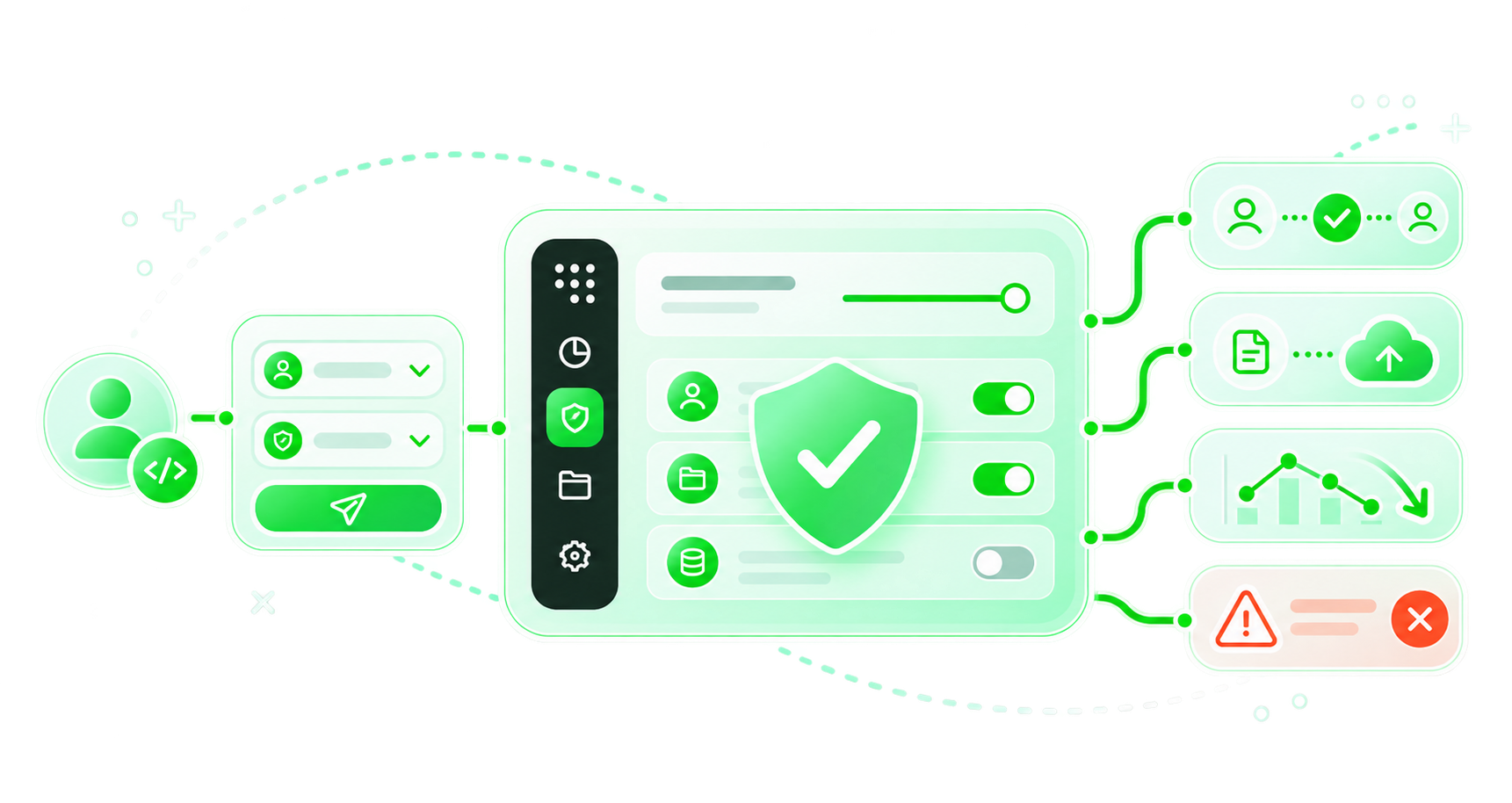
Developers need cloud access quickly to keep work moving. But every new request adds operational work for DevOps and cloud operations teams — creating a bottleneck that slows both sides down.
Teriam supports a self-service access provisioning model that lets developers request permissions directly, without routing everything through a manual DevOps workflow. Organizations get faster access delivery without giving up security, governance, or control.
How it works
In this mode, the developer submits a request in Teriam for the permissions they believe are needed for a task, project, or workload. From there, Teriam takes over:
- Analyzes the request against internal standards and compliance requirements
- Determines whether approval is required
- Routes the request to the appropriate approver when needed
- Applies the policy in the cloud environment once approved
Once access is granted, the developer continues working while Teriam monitors how the identity is actually being used over time. Based on observed activity, Teriam recommends a more precise permission set — keeping access aligned with real needs rather than being broader than necessary.
Built-in guardrails
Self-service access provisioning doesn't mean uncontrolled access. Teriam includes guardrails to ensure that high-risk permissions are handled with appropriate care. Dangerous privileges — particularly those that could enable privilege escalation or create significant security exposure — are never automatically approved or applied. Instead, they can be flagged for engineers’ review, routed for additional approval, restricted by policy, or blocked from automatic application entirely. This allows organizations to support faster access delivery without weakening security controls.
What Teriam provides
-
Developer self-service access requests
Developers submit permission requests directly in Teriam without depending on a full manual DevOps workflow for every change.
-
Policy and compliance checks
Teriam evaluates every request against internal standards, naming conventions, and compliance requirements before anything is applied.
-
Approval workflows
When required, Teriam routes requests to the appropriate approver before any policy change takes effect.
-
Automated policy application
Teriam applies approved policies automatically, directly in the cloud environment without manual intervention.
-
Continuous rightsizing
After access is granted, Teriam monitors usage and recommends a tighter, more accurate permission set based on actual behavior.
-
Guardrails for risky privileges
High-risk permissions are not automatically granted but are flagged for additional review or policy enforcement.
Business value
With Teriam, organizations can reduce the manual workload for DevOps engineers, give developers faster access to the resources they need, preserve approval and compliance processes, cut delays caused by traditional ticket-based access workflows, and improve least-privilege adoption over time — all without giving up governance.